
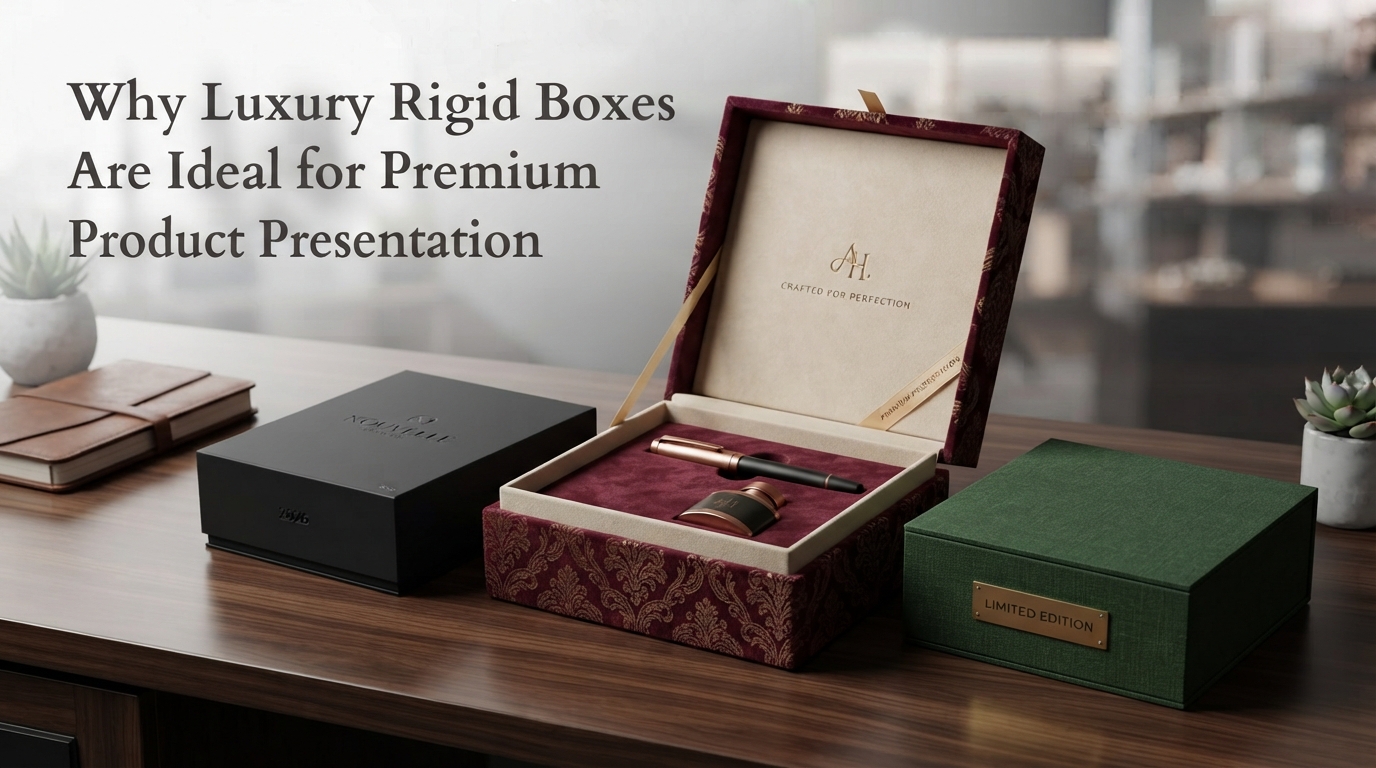
Premium products often require packaging that communicates value before the product is even revealed. While packaging must protect its contents, it can also influence how customers perceive quality, craftsmanship, and attention to detail.

For brands selling high-end products, the packaging experience can become part of the overall product experience. A carefully designed box can establish expectations, create anticipation, and provide a memorable unboxing moment.
That is why Custom Packaging Boxes USA are increasingly considered as part of a broader branding strategy rather than simply a container for merchandise.
Among the many packaging formats available, luxury rigid boxes are particularly suited to products that require a stronger, more substantial presentation.
What Are Luxury Rigid Boxes?
Luxury rigid boxes are premium presentation boxes made with sturdy materials and designed to provide both structural support and an elevated visual experience.
Unlike lightweight folding cartons, rigid packaging maintains its shape and provides a more substantial feel in the hands of the customer.
The construction can be customized according to the product and brand requirements. Depending on the project, brands may consider:
- Custom dimensions
- Premium paper wraps
- Interior printing
- Inserts
- Magnetic closures
- Special finishes
- Custom artwork
- Multiple compartments
The objective is to create packaging that fits the product while reflecting the brand’s positioning.
Why Packaging Matters for Premium Products
A premium product is often judged through multiple touchpoints.
Customers may evaluate the brand based on its website, advertising, product photography, customer service, product quality, and ultimately the physical experience of receiving the order.
Packaging sits directly within that final stage.
A well-designed package can create a sense of anticipation when the customer receives it. Opening the box becomes part of the purchase journey rather than simply an act of removing protective material.
Creating a Strong First Impression
The exterior of the package is usually the first visual element the customer encounters.
Luxury packaging can use carefully selected design elements to establish the desired tone.
For example, a brand might choose:
- Minimal typography
- Subtle patterns
- High-contrast graphics
- Metallic accents
- Embossed logos
- Soft-touch surfaces
- Refined color combinations
The goal is to create a visual hierarchy that communicates the brand clearly without overwhelming the customer.
Good luxury packaging is not necessarily the packaging with the most decorative elements. It is the packaging where each element has a purpose.
The Importance of Structure
The structure of a rigid box contributes to the physical experience.
A sturdy construction can make the package feel more substantial when handled, while the opening mechanism can influence how the product is revealed.
Depending on the product, businesses may explore different rigid-box structures, including hinged, lift-off, or other customized configurations.
The best choice depends on the product dimensions, number of components, intended presentation, and budget.
Designing the Interior
Luxury packaging should not stop at the exterior.
When the customer opens the box, the interior becomes the main stage for the product.
An effective interior can include:
- A fitted product insert
- Interior printing
- Product information
- Brand messaging
- Accessory compartments
- Protective cushioning
- Custom trays
This creates a more organized presentation and can prevent the contents from appearing loose or randomly arranged.
Custom Inserts for Premium Products
Inserts can serve both functional and aesthetic purposes.
A fitted insert can hold a product securely while creating a specific position for accessories or supplementary materials.
For example, a jewelry package might have designated spaces for the main item and supporting pieces. A technology package might separate the primary device from its accessories.
Foam, paperboard, cardboard, and other materials can be considered depending on the application.
The insert should be selected based on the product’s dimensions, fragility, weight, and presentation requirements.
Printing and Finishing Options
Printing gives brands the opportunity to transform a rigid box into a recognizable extension of their visual identity.
Depending on the packaging specification, brands can explore techniques such as:
Foil Accents
Foil can highlight logos, lettering, borders, or selected design details.
Embossing
Embossing creates raised areas that can add texture and physical dimension.
Debossing
Debossing presses selected artwork into the surface, creating a recessed effect.
Soft-Touch Finishing
A soft-touch finish can create a smoother tactile experience and complement minimalist premium designs.
Matte and Gloss Finishes
Matte and gloss treatments can be used to influence the overall visual character of the packaging.
Spot UV
Spot UV can create selective gloss effects that contrast with surrounding surfaces.
These techniques can be used individually or in combination, depending on the desired result.
Choosing the Right Size
Luxury packaging should be designed around the actual product.
An oversized box may create unnecessary empty space, while a box that is too tight can make packing and product removal difficult.
Before production, brands should consider:
- Product length
- Product width
- Product height
- Product weight
- Accessories
- Protective materials
- Insert requirements
- Shipping considerations
Accurate dimensions also make it easier to plan the internal presentation.
Luxury Packaging Across Industries
Luxury rigid packaging can be adapted to many product categories.
Jewelry
Jewelry brands often need compact packaging that creates a refined presentation while keeping individual pieces organized.
Cosmetics
Premium beauty products can use rigid packaging to support collection launches, gift sets, and high-end product lines.
Watches and Accessories
Structured packaging can help position products and accessories in a deliberate arrangement.
Electronics
Premium technology products may benefit from a rigid package with dedicated spaces for the device and accompanying components.
Corporate Gifts
Businesses can use luxury packaging when presenting awards, executive gifts, promotional kits, or special client packages.
Fashion
Luxury apparel accessories and limited-edition products can use custom packaging to reinforce exclusivity and brand identity.
Rigid Packaging and the Unboxing Experience
Unboxing has become an important part of product discovery, particularly for ecommerce brands.
Customers may photograph or record the experience, share the packaging online, or simply remember how the product was presented.
A rigid box can help create a structured sequence:
Package arrives → exterior branding → opening mechanism → interior reveal → product presentation
Every stage provides an opportunity to reinforce the brand.
However, an effective unboxing experience does not have to be complicated. A clean opening process and carefully organized contents can be more effective than excessive decoration.
Balancing Protection and Presentation
Luxury packaging still needs to perform its fundamental job: containing and protecting the product.
The packaging design should therefore account for the expected shipping and handling environment.
Internal inserts can help limit product movement, while the rigid structure provides a stable enclosure. Additional protective measures may also be required depending on the product and shipping method.
A presentation box should not be evaluated solely by its appearance. The complete packaging system should be appropriate for the product’s distribution requirements.
Sustainability Considerations
Premium packaging and sustainability do not necessarily have to be opposing goals.
Brands can consider material choices, package dimensions, recyclability, and the overall amount of material used during the design stage.
A right-sized box can help reduce unnecessary space, while recyclable material options may be considered where appropriate.
Businesses should also think about what happens to the packaging after the customer receives the product. Packaging that is durable enough to be reused can potentially provide additional value beyond the initial purchase.
Common Luxury Packaging Mistakes
Using Too Many Decorative Elements
Adding multiple finishes and design elements without a clear hierarchy can make the package look cluttered.
Ignoring Product Fit
A premium box that does not properly fit its contents can reduce both presentation quality and practicality.
Forgetting the Interior
The customer spends much of the unboxing experience looking inside the package. Interior design deserves as much consideration as the exterior.
Prioritizing Appearance Over Function
A beautiful package still needs to protect the product and work with the fulfillment process.
Making the Opening Difficult
The opening experience should feel intentional, not frustrating.
Choosing Finishes Without a Clear Purpose
Special finishes should support the brand identity rather than simply increase the number of visual effects.
How to Plan a Luxury Rigid Box
A straightforward planning process can help businesses make better packaging decisions.
1. Define the product.
Measure the product and identify its protection requirements.
2. Establish the brand direction.
Determine the visual style, colors, typography, and messaging.
3. Select the box structure.
Choose a format appropriate for the product and desired opening experience.
4. Plan the interior.
Determine whether inserts, trays, or compartments are necessary.
5. Develop the artwork.
Create exterior and interior graphics around the brand identity.
6. Select finishing techniques.
Choose finishes that reinforce the desired aesthetic.
7. Review packaging costs.
Consider materials, construction, quantity, printing, finishing, inserts, and shipping.
8. Evaluate a sample.
Where appropriate, reviewing a physical sample can help identify structural or presentation issues before production.
Frequently Asked Questions
1. What are luxury rigid boxes used for?
Luxury rigid boxes are commonly used for premium products that require a substantial and highly customized presentation. Applications can include jewelry, cosmetics, electronics, fashion accessories, gifts, and corporate products.
2. Can luxury rigid boxes be customized?
Yes. Depending on the project, customization can include dimensions, artwork, printing, inserts, finishes, closures, and interior configurations.
3. Are inserts available for rigid boxes?
Yes. Inserts can be designed from materials such as foam, paperboard, or cardboard to organize and support products inside the box.
4. What finishes can be used on luxury rigid packaging?
Depending on the specification, options may include matte, gloss, soft-touch, foil, embossing, debossing, and Spot UV.
5. How do brands choose the right luxury box?
Brands should consider product dimensions, weight, fragility, number of components, desired presentation, shipping method, order quantity, and budget before finalizing the box structure.
Conclusion
Luxury rigid packaging can give premium products a more deliberate and memorable presentation. From the physical structure to the artwork, inserts, finishing, and opening experience, every element can contribute to how customers perceive the brand.
The most successful designs balance appearance with practical considerations. A box should fit the product properly, protect its contents, support efficient fulfillment, and communicate the brand without unnecessary complexity.
For businesses competing in premium markets, packaging can become more than an afterthought. It can be an important part of the product experience, helping create anticipation at delivery and reinforcing the brand long after the box has been opened.
Leave a Reply