
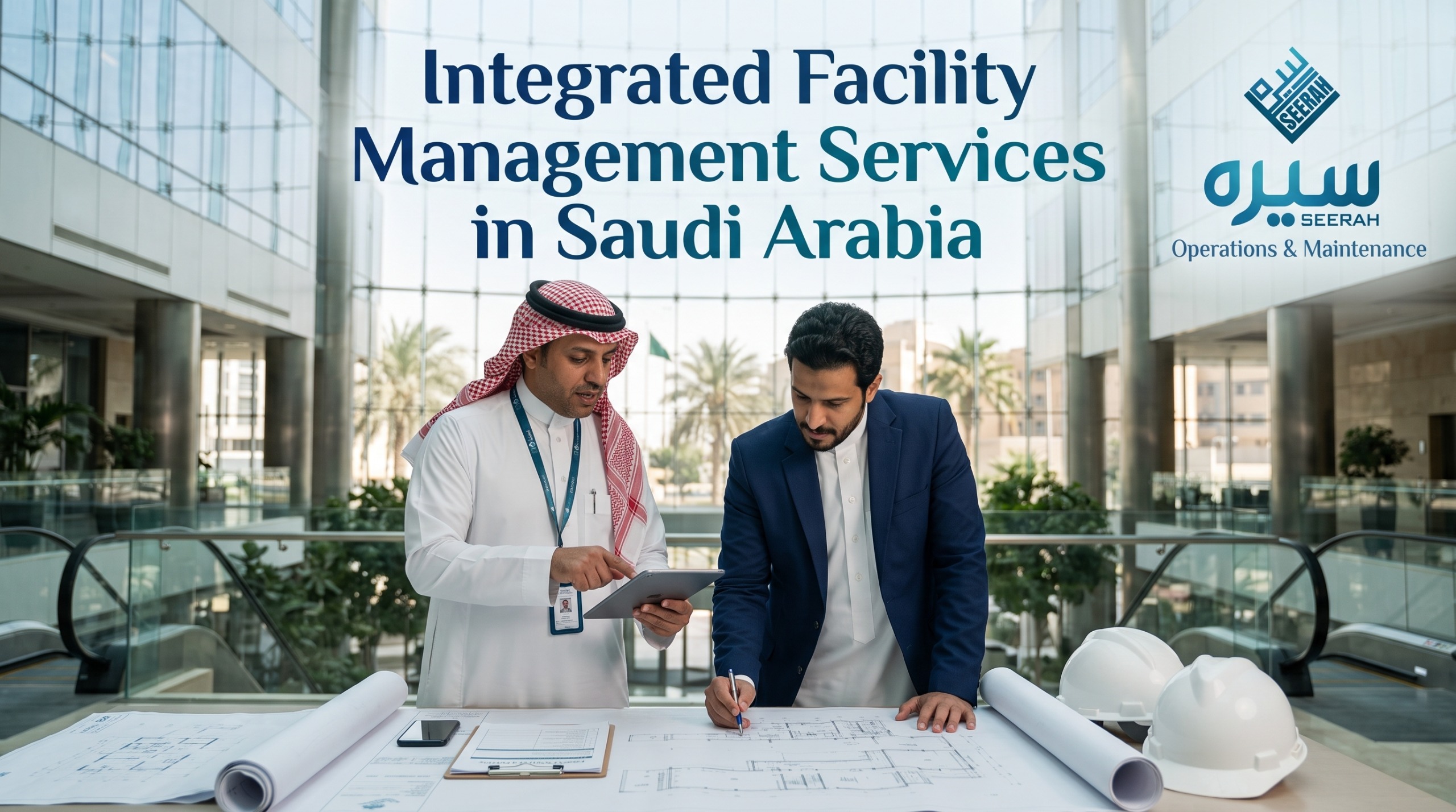
Modern businesses depend on more than well-designed buildings. They require organized operational systems that keep facilities functional, employees supported, and essential infrastructure performing consistently.

A commercial property may appear efficient from the outside, yet behind its daily operations are hundreds of maintenance decisions, workforce activities, inspections, and service requirements.
As Saudi Arabia continues expanding its commercial, industrial, and institutional infrastructure, organizations are placing greater emphasis on professional facility oversight.
This growing need has increased the relevance of Integrated Facility Management Services in Saudi Arabia, allowing businesses to bring multiple operational responsibilities into a coordinated management structure.
Seerah, a Saudi-based company providing workforce solutions and facility management services, supports organizations seeking professional approaches to maintaining and managing business environments.
Facility Audits: Understanding Operational Performance Before Problems Occur
A facility audit is a structured assessment of a building’s operational condition, maintenance practices, and service requirements.
Rather than evaluating individual maintenance requests in isolation, an audit provides a broader understanding of how effectively a facility is functioning.
A comprehensive assessment may examine technical infrastructure, equipment records, cleaning standards, maintenance procedures, and operational documentation.
For commercial and industrial organizations, regular facility reviews can help identify areas requiring attention before they develop into more significant operational concerns.
An effective facility audit may cover:
- Mechanical and electrical system conditions.
- HVAC maintenance requirements.
- Existing preventive maintenance schedules.
- Cleaning and housekeeping performance.
- Maintenance documentation.
- Workforce and operational resource allocation.
- Equipment condition and servicing priorities.
Integrated facility management allows these findings to be incorporated into a coordinated improvement plan.
Compliance Readiness and the Importance of Organized Facility Records
Businesses operating in Saudi Arabia must consider the regulatory, contractual, and operational requirements applicable to their facilities.
Depending on the industry and building type, these requirements may involve safety procedures, equipment inspections, maintenance documentation, environmental practices, and other relevant obligations.
Maintaining organized facility records helps businesses demonstrate that required activities have been planned, assigned, and documented.
Professional facility management supports this process by establishing consistent maintenance procedures and improving access to operational information.
However, regulatory compliance remains dependent on the applicable legal requirements, facility conditions, and responsibilities established between the property owner and service provider.
Seerah’s operation and maintenance capabilities support businesses seeking more structured technical and facility management practices.
Maintenance Budgeting: Planning Beyond Immediate Repair Costs
Unexpected maintenance expenses can create challenges for organizations managing large commercial properties or multiple facilities.
A reactive approach often focuses on addressing equipment problems only after failures occur.
While corrective maintenance remains necessary, relying exclusively on emergency repairs can make operational expenditure difficult to forecast.
A structured maintenance budget considers both current facility requirements and expected future needs.
Key Areas of Maintenance Budget Planning
Routine Servicing: Allocating resources for scheduled equipment inspections and maintenance activities.
Corrective Maintenance: Preparing for necessary repairs identified during daily operations.
Equipment Replacement: Considering the future replacement of assets approaching the end of their useful service life.
Workforce Requirements: Planning technical personnel and operational support resources.
Specialized Services: Accounting for maintenance activities requiring additional technical expertise.
Integrated Facility Management Services in Saudi Arabia help organizations connect these requirements through a more organized operational framework.
Why Occupant Satisfaction Matters in Commercial Facilities
Facility performance should not be evaluated exclusively through technical maintenance reports.
The experience of people using a building also provides valuable information about operational quality.
Employees, visitors, tenants, and other facility occupants interact with building services throughout the day.
Their experience may be influenced by indoor temperature, cleanliness, lighting, maintenance response, and the general condition of shared spaces.
Organizations can use occupant feedback to identify recurring operational concerns and prioritize service improvements.
For example, repeated complaints about indoor temperature may indicate a need to review HVAC performance, maintenance schedules, or environmental controls.
By connecting user feedback with technical maintenance activities, businesses can develop more responsive facility management practices.
Seerah supports commercial organizations through integrated facility services that contribute to professionally maintained business environments.
Seerah: Connecting Facility Management with Business Requirements
Businesses seeking professional facility management companies in Saudi Arabia often require more than a contractor responsible for individual maintenance tasks.
They need access to technical capabilities, suitable workforce resources, and coordinated operational support.
Seerah Operation & Maintenance Co. provides business-focused solutions covering several important facility requirements.
Its service portfolio includes:
- Integrated Facility Management
- Operation and Maintenance Services
- HVAC and Technical Maintenance
- Mechanical, Electrical, and Plumbing Support
- Preventive and Corrective Maintenance
- Commercial Cleaning and Soft Services
- Skilled Workforce and Manpower Solutions
- Landscaping and Facility Support
- CAFM and Facility Technology Solutions
Through its combination of facility management and workforce expertise, Seerah supports organizations managing commercial and industrial operations.
Businesses interested in Integrated Facility Management Services in Saudi Arabia can explore Seerah’s capabilities and available business solutions.
Service Mobilization: Preparing for a Successful FM Contract
One important stage of a facility management agreement is service mobilization.
This refers to the preparation required before a service provider begins delivering contracted facility management activities.
Effective mobilization helps establish operational expectations, workforce responsibilities, maintenance priorities, and communication procedures.
A structured mobilization process may involve several stages.
Initial Facility Assessment
Reviewing the facility’s infrastructure, existing maintenance requirements, and operational priorities.
Workforce Planning
Identifying the personnel, technical capabilities, and supervision required for the agreed service scope.
Maintenance Schedule Development
Preparing planned maintenance activities according to equipment requirements and operational conditions.
Communication and Reporting
Establishing appropriate procedures for maintenance requests, operational updates, and service reporting.
Operational Commencement
Beginning agreed facility management activities according to the established service arrangements.
For businesses outsourcing facility operations, proper mobilization can help reduce uncertainty during the transition between service providers.
Data-Driven Decisions in Modern Facility Management
Facility management generates valuable operational information through work orders, maintenance reports, equipment records, and service activities.
When this information is properly organized, businesses can identify patterns that may otherwise remain unnoticed.
For example, recurring maintenance requests involving the same equipment may indicate a need for further technical investigation.
Similarly, comparing planned maintenance activities with completed work can help management evaluate operational performance.
Digital tools such as Computer-Aided Facility Management (CAFM) systems support the organization of this information.
Data-driven facility management can help businesses improve maintenance planning, resource allocation, and long-term asset decisions.
As Saudi Arabia continues developing modern commercial infrastructure, organized facility information will remain increasingly valuable.
Creating Consistent Facility Standards Across Business Locations
Organizations operating across multiple Saudi cities often face the challenge of maintaining consistent service expectations.
A company may manage corporate offices in Riyadh, commercial facilities in Jeddah, and industrial operations in Dammam or Jubail.
Although each location may have different technical requirements, businesses can benefit from establishing common operational standards.
These may include maintenance documentation procedures, reporting formats, service quality expectations, and performance evaluation methods.
Integrated facility management helps organizations coordinate these standards while allowing individual facilities to address their specific operational needs.
Seerah’s facility management and workforce solutions are relevant to businesses seeking coordinated support across Saudi Arabia’s commercial and industrial sectors.
The Long-Term Value of Professional Facility Oversight
Facility management is most effective when organizations treat it as an ongoing business responsibility rather than a series of disconnected maintenance activities.
Regular assessments, planned expenditure, occupant feedback, service monitoring, and organized operational records all contribute to better facility oversight.
A coordinated approach helps management teams understand the condition of their infrastructure and make informed decisions about future operational requirements.
Professional facility management also creates clearer communication between building owners, operational personnel, and service providers.
For organizations seeking sustainable operational performance, these practices provide an important foundation for long-term planning.
Conclusion
Efficient facility operations require careful coordination between technical systems, maintenance budgets, workforce resources, service standards, and operational information.
Integrated Facility Management Services in Saudi Arabia help businesses manage these responsibilities through a more connected and organized approach.
From facility audits and compliance readiness to service mobilization and performance monitoring, integrated solutions support the effective management of modern business infrastructure.
Seerah contributes to this sector through its professional facility management, operation and maintenance, and workforce solutions.
For commercial and industrial organizations seeking dependable facility support, Seerah offers business-focused service capabilities designed to address evolving operational requirements.
Company Website: https://seerah.sa
Seerah Group | Workforce Solutions & Facility Management
Leave a Reply