
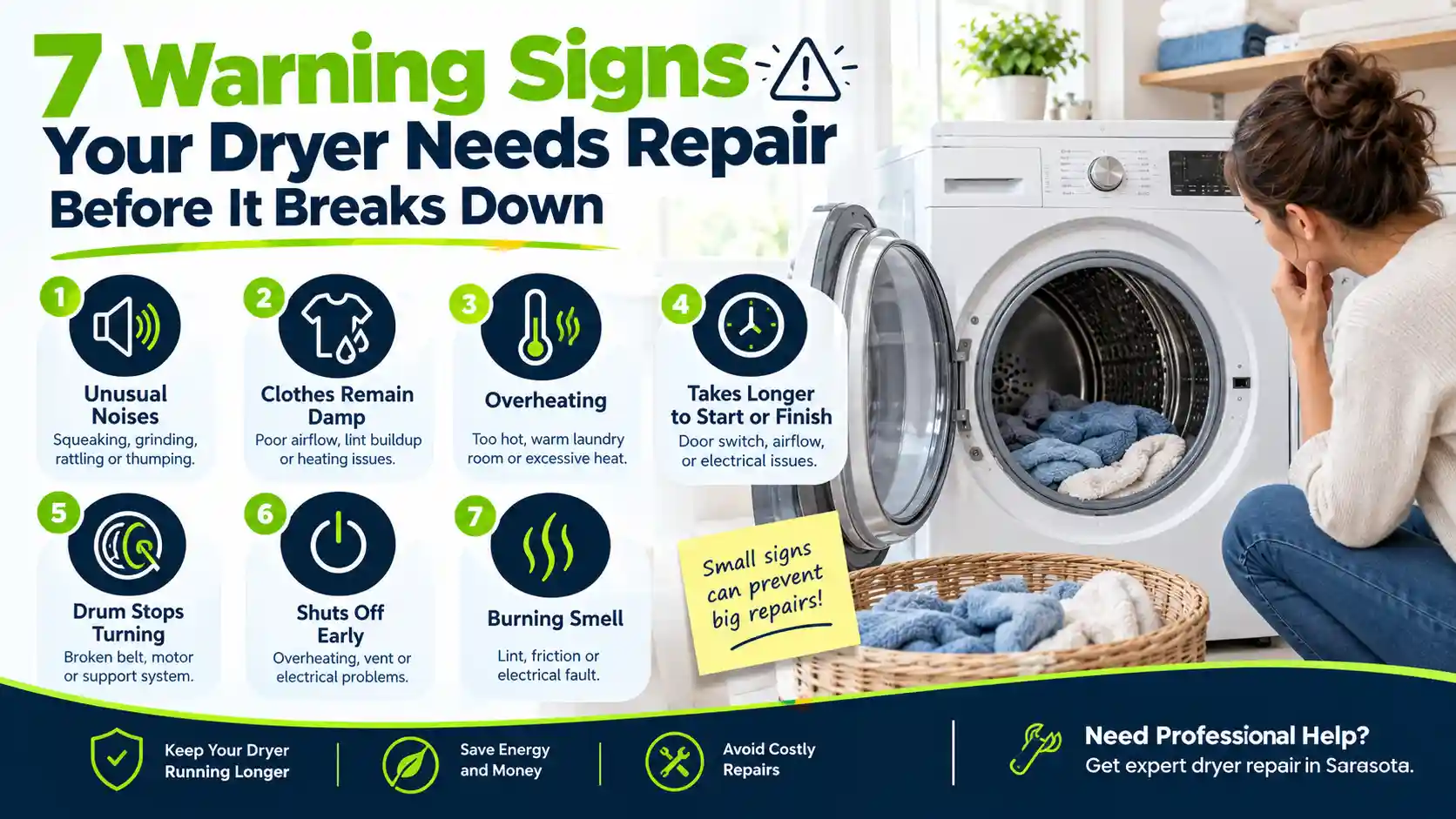
A clothes dryer often shows warning signs before it stops working completely. Unusual noises, inconsistent heating, repeated shutdowns, and burning smells can indicate problems that deserve attention. Recognizing these symptoms early and arranging dryer repair in Sarasota when necessary can help prevent more serious damage and restore your laundry routine.

Although some dryer issues result from simple maintenance problems, others involve electrical, heating, or mechanical components that require professional diagnosis. Knowing the difference can help you make safer and more informed decisions about your appliance.
1. Your Dryer Makes Unusual Noises
A dryer should generally operate with a consistent, low-level sound. If it begins squeaking, grinding, rattling, or thumping, something may be wrong.
Different sounds can point to different issues:
- Squeaking: Worn drum rollers, idler pulleys, or other moving components may be responsible.
- Grinding: Damaged bearings or a motor-related problem may be involved.
- Rattling: Loose hardware or an object trapped inside the drum could be causing the noise.
- Repeated thumping: An uneven load or a worn drum support may be the source.
First, stop the cycle and check for loose objects such as coins, buttons, or zippers. If the noise continues with an empty drum, avoid repeatedly running the dryer in an attempt to make it disappear. A technician can inspect the moving parts and determine whether a repair is needed.
2. Clothes Remain Damp After a Full Cycle
When clothing repeatedly comes out damp, the cause may be restricted airflow, an overloaded drum, a dirty lint screen, or a problem with the heating system.
Start by cleaning the lint screen and checking that clothes have enough room to tumble. If your dryer has an accessible vent hose, inspect it for obvious kinks or crushing when the appliance is switched off and disconnected from power as directed by the manufacturer.
A blocked exhaust duct can prevent moist air from escaping properly. This reduces drying performance and can cause excessive heat to build up.
If routine maintenance does not improve the results, the problem may involve a faulty sensor, thermostat, heating component, or blower. Professional diagnosis can help identify the cause rather than relying on longer drying cycles.
3. The Dryer Overheats
A dryer that becomes unusually hot, makes the laundry room excessively warm, or leaves clothes much hotter than expected may have an airflow or temperature-control problem.
Lint accumulation inside the exhaust system is one possible cause. When air cannot move freely, heat may build up inside the appliance. A faulty thermostat or another control component can also affect temperature regulation.
Do not ignore repeated overheating. Stop using the dryer if it becomes excessively hot, and arrange an inspection. If you notice smoke or a burning smell, stop the cycle immediately and disconnect power only if it is safe to do so. If a fire is suspected, leave the area and contact emergency services.
Cleaning the lint screen after every load and maintaining the exhaust duct are important preventive steps.
4. Your Dryer Takes Longer to Start or Finish
Changes in starting behavior or cycle duration may indicate a developing fault. For example, a dryer that starts only occasionally could have a door-switch issue, a control problem, or an electrical supply concern.
If the dryer starts normally but takes much longer to finish, restricted airflow, an overloaded drum, or a failing component may be responsible.
Before arranging service, check that the door closes securely, the selected cycle suits the load, and the lint screen is clean. Consult the owner’s manual for any error codes or troubleshooting steps specific to your model.
Avoid opening electrical panels or testing internal wiring yourself. Electrical faults should be assessed by a qualified professional.
5. The Drum Stops Turning
A dryer needs a functioning drum drive system to tumble clothes evenly through warm air. If the motor runs but the drum does not turn, a broken belt or a problem with the drum support system may be involved. In other cases, a motor or control fault may prevent the drum from moving.
Turn off the appliance if the drum stops unexpectedly. Do not continue operating it while the motor runs without normal tumbling, as this may place additional strain on internal components.
A technician can inspect the belt, rollers, pulleys, motor, and related parts to determine which component needs attention.
6. Your Dryer Shuts Off Before the Cycle Ends
Unexpected shutdowns can interrupt laundry and may signal overheating, a restricted vent, an electrical issue, or a failing component.
Some dryers include safety features that interrupt operation when temperatures rise beyond acceptable limits. If airflow is restricted, the appliance may repeatedly stop as it attempts to protect itself.
Check whether the lint screen needs cleaning and whether the vent has an obvious external obstruction. If the dryer continues shutting off, do not repeatedly restart it without investigating the reason.
A technician can test the temperature-control system, inspect airflow, and check the relevant electrical components.
7. You Notice a Burning Smell
A burning odor is one of the most important dryer warning signs. It may result from lint near hot components, friction from a damaged part, or an electrical problem.
Stop the dryer immediately if you notice this smell. Do not run another cycle to see whether the odor disappears. If there is smoke or evidence of fire, leave the area and call emergency services.
Even if the smell fades after the appliance is switched off, have the dryer inspected before using it again. Cleaning the lint screen is helpful, but it may not remove lint that has accumulated inside the machine or resolve a failing mechanical or electrical component.
How to Reduce the Risk of Dryer Breakdowns
A few consistent habits can help keep your dryer operating more reliably:
- Clean the lint screen after every load.
- Keep the drum free of coins and other loose objects.
- Avoid overloading the appliance.
- Clean the exhaust duct periodically according to the manufacturer’s guidance and how frequently the dryer is used.
- Check accessible vent sections for crushing, kinks, or visible obstructions.
- Use the recommended settings for different fabrics.
- Pay attention to new noises, unusual heat, and changes in drying time.
- Arrange professional maintenance when problems persist.
These measures support proper airflow and reduce unnecessary strain on the appliance. They can also help you identify developing issues before they cause a complete breakdown.
When Should You Call a Dryer Repair Technician?
Basic maintenance can resolve some performance issues, but persistent faults often require specialist tools and experience. Professional service is advisable when the dryer repeatedly overheats, fails to heat, stops tumbling, shuts down unexpectedly, or produces unusual mechanical noises.
For households in Sarasota, Florida, timely appliance maintenance can help avoid the inconvenience of an unexpected breakdown during a busy week. You can visit Appliance Repair in Sarasota for information about appliance repair services and support.
Before arranging service, note your dryer’s brand, model number, symptoms, and when the problem occurs. This information can help the technician narrow down the possible causes.
Final Thoughts
A dryer rarely develops every problem at once. More often, small changes in sound, temperature, cycle duration, or performance provide early clues that something needs attention.
Responding to these signs promptly can help limit further damage, improve efficiency, and extend the useful life of your appliance. Keep up with routine cleaning, avoid ignoring safety warnings, and seek professional assistance when a problem goes beyond basic maintenance.
Leave a Reply